

The Mile High City has become one of the most sought-after destinations for real estate owners. Searching for a home might seem like an interesting adventure for you. You need to be aware that the sticker price you see on most properties is not the final price. The median home price in Denver is around $560,000. The real cost of living in Denver is the sum of all day-to-day costs that add up eventually. Now, some of these you might already be aware of; on the other hand, there are some hidden costs you might not know.
The Importance of Understanding Expenses
You must understand the costs besides the mortgage. That means understanding the cost of taxes, insurance, and utilities. If you know the costs in advance, you won’t become one of those house-poor folks. All you have to do is calculate expected yearly expenses in advance. That will help you manage a standard of living without constantly worrying about bills. This article will do just that. We will give you a complete overview of Average Yearly Homeowner Expenses in Denver (2026 Guide). Read on.
Denver Mortgage Expenses
Below is a brief overview of mortgage, taxes, insurance & other costs. Note that this does not include groceries and transportation expenses.
The Mortgage:
The mortgage is usually a payment for two separate things. The principal you pay to buy your home & the interest you pay the lender on the loan.
In the beginning, most of your payment goes towards the interest. If your interest rate is 6.5, your monthly payment is $2,912. To calculate your annual payment, multiply this amount by 12.
- Estimated Annual Mortgage = $34,944

Property Taxes
Property Taxes:
The taxes are low in Denver compared to other cities. You usually have to pay 0.5% of your property’s value annually.
- Home Value: $560,000
- Tax applied: 0.5%
- Estimated Annual tax: $2,800 per year
- Average Monthly Tax: $233 per month.
Factors That Influence Property Taxes
End of state relief:
Remember in 2024 when you benefited from state relief that lowered your home’s tax value? You saved almost $55,000 back then. well say bye-bye to that because that relief has ended. From here on, you will be taxed on your home’s full value.
The Mill Levy:
Even if your home value remains the same, the mill levies can increase your tax expenses. It is established by city or county offices. For example, one mill could be $1 in tax for every $1,000 of your home’s assessed value.
Home Insurance Costs in Denver
Homeowner’s Insurance
Home insurance costs depend on Denver’s weather. Hailstorms will beat your roof like a drum, and the wild wind will destroy its structure. You can get lower premium rates if your roof is new.
- Yearly cost: about $2,300
- Monthly cost: about $191
Tips to Lower Insurance Premiums
- Different companies offer different prices for coverage. So it’s totally fine to take your time and get as many quotes as you can. You never know, you might get a lower rate than the one you were expecting to pay.
- Another way to lower your expenses is to get a bundle for your home & auto insurance from the same provider. You might hit a multi-policy discount.
- Invest in upgrades like a new roof or storm-resistant windows. Then let your insurance provider know, as this lowers the risk for them. And if the risk is low, they will likely lower your premium rates.
Utility Costs for Denver Homeowners
Utilities:
The bills can spike in the winter because Denver has one of the coldest winters. Burning more gas to keep your house warm will definitely cost more. On average, Denver residents pay between $250 and $350 per month in utility bills.
Average Monthly vs Yearly Utility Costs
- Estimated Monthly Utility expenses: $250 to $350
- Estimated Annual Utility expenses: $3,000 to $4,200
Hidden Costs of Home Ownership
There are several hidden expenses that first-time buyers are not aware of. These expenses can catch you off guard if you are not careful. Below you will find a breakdown of hidden expenses.
- Day one expenses will show up when you finally sign the paperwork. If you are not careful, you will end up paying around 2% and 5% of your home’s price in so called closing fee. That’s like $10,000 to $25,000 extra. This would be the so-called loan fee, appraisals, and & title insurance.
- At present, the tax rates in Colorado are low. They are about 0.5% to 0.6%. But the tax rates are rising. For example, if your house’s value is $550,000, you might have to pay $2,750 to $3,300 annually in taxes.
- Assuming that you live in a well-planned community. Since you are a resident, you will have to pay $200 to $400 monthly as HOA dues. The communities usually raise charges 3% to 5% every year.
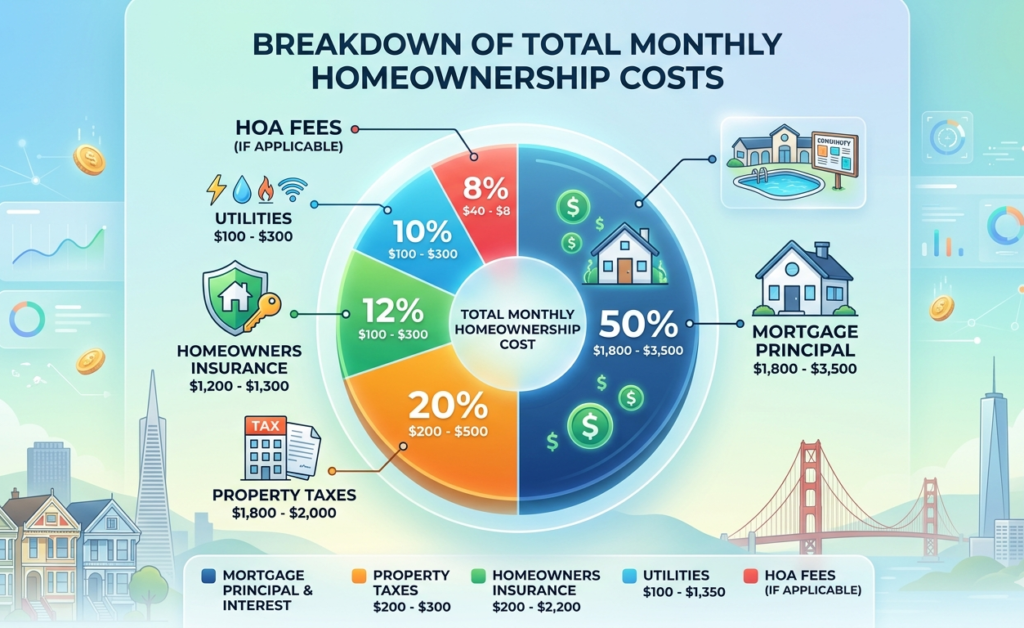
Denver Average Annual Cost Table (2026)
| Category | Estimated Monthly Cost | Yearly Cost | |
| Mortgage (Principal + Interest) | $2,912 | $34,944 | |
| Property Taxes | $233 | $2,800 | |
| Homeowner’s Insurance | $191 | $2,300 | |
| Utilities | $250 to $350 | $3,000 to $4,200 | |
| HOA Fees (if applicable) | $200 to $400 | $2,400 to $4,800 | |
| Estimated Total | $3,786 to $4,086 | $45,444 to $49,044 |
How Denver Compares to Other U.S. Cities
You are in the right place if you are trying to gauge how much it will cost to live in Denver compared to other cities. We have gathered the 2026 date and written a breakdown for you below.
Denver vs Omaha
Denver’s cost index is 113, and the national average is 112. So it’s only slightly higher. The better way to gauge the cost is to compare Denver to a city like Omaha, whose cost index is 96. So Omaha does seem more affordable; however, you also need to understand that if you transferred to Denver, you would receive a higher salary.
| Denver Median Income | National Average Income | Omaha Median Income |
| $91,681 | $80,367 | $72,708 |
Is Denver Expensive?
well yes… if you are planning to move to Denver, you should keep several points in mind.
- The average house costs around $560,000. That’s quite higher then national average.
- The average house cost in Omaha is $288,850.
You will have to pay a bigger down payment if you move to Denver. It can be a great place to live after you get over that initial hurdle.
Tips to Reduce Your Yearly Homeownership Costs
There are several ways you can lower or control your homeownership costs. Read them below.
- Seal all the heat leaks inside your home with caulk. Replace your HVAC filters regularly. This can keep your home warmer for longer, hence lowering your utility bills.
- Buy a watt meter to track how much energy each appliance in your home is consuming.
- Audit all your property taxes carefully each year. If you find discrepancies or feel that your home’s estimated value is wrong, file an appeal.
- Do the small repairs yourself, like cleaning your gutters and fixing leaks.
FAQs
Can you tell me the average yearly cost of owning a home in Denver in 2026?
The cost range is between $45,444 and $49,044. This is an estimated number based on mortgage, taxes, insurance & utilities costs.
What is the average mortgage payment in Denver?
The interest rate in Denver is 6.5%. The average mortgage payment is around $2,912monthly. It can add up to$34,944 annually.
How much property tax do you have to pay in Denver?
The property taxes are lower compared to the rest of the US cities. On average, Denver residents pay 0.5% of their home’s value annually. So if your home value is $560,000 home, the tax will be $2,800 per year.
What is the cost of homeowner’s insurance in Denver?
It depends on the condition of your home’s roof & weather. It costs about $2,300 per year or roughly $191 per month.
How much do utilities cost in Denver?
The utilities can cost you between $250 and $350 per month. The costs usually go up in the cold season.
Can you tell me some hidden costs of home ownership in Denver?
There are closing costs, HOA fees, and maintenance expenses that most homeowners are not usually aware of.
Is Denver more expensive than other cities?
Yes, Denver is a bit more expensive compared to Omaha. Its cost of living is higher than the national average, and Omaha’s is lower.
Can you tell me what the HOA fee is in Denver?
HOA fees can cost between $200 and $400 per month. The fees usually increase 3% to 5% annually.
Conclusion:
You need to understand many things besides the mortgage before you buy a house in Denver. There are a lot of other expenses to think of, like taxes, insurance, and utilities, to name a few. Denver is expensive in some ways compared to other cities. The costs are manageable with careful tracking and budgeting. We hope this article has provided you with the information to make better financial decisions. Now you are in a much better position to manage the monetary aspects of living in the Mile High City.